
Master Restaurant Inventory Management: Cut Food Waste & Boost Profits
Discover practical strategies for restaurant inventory management. Cut food waste, control recipe costs, and protect your margins with smart cloud technology.
By KHALID 5 min read
Introduction: The Hidden Drain on Your Restaurant's Bottom Line
In the fast-paced world of food service, most operators spend endless hours trying to boost sales and attract new faces through the door. Yet, there’s a quiet leak that constantly undermines that hard work: inefficient operations behind the kitchen doors. Every single day, a noticeable chunk of profit quietly disappears inside refrigerators, storage rooms, and preparation stations without making it onto the monthly P&L statement.
The real challenge with food waste and inaccurate recipe costing is that they rarely show up as an immediate line item on a daily receipt. Instead, they act as a slow financial drain, eroding your net margins over time. In this comprehensive guide, we’ll break down the root causes of inventory loss and share actionable, field-tested tactics to take control of your food costs.
1. Differentiating Between Expected and Operational Food Waste
You can never completely eliminate food waste in a busy kitchen, but keeping your margins healthy comes down to understanding the difference between two distinct types of loss:
Expected (Yield) Waste: The natural shrinkage that happens during prep—peeling vegetables, trimming fat, or removing bones. This should always be built into your base recipe costing from day one.
Operational Waste: The avoidable losses caused by expired ingredients, overcooked orders, billing mistakes, or improper storage temperatures.
When you start tracking operational waste against your expected baseline on a daily basis, you immediately gain visibility into where your hard-earned money is slipping away.
2. Naive Pricing vs. True Recipe Costing
One of the most frequent mistakes operators make is pricing dishes based on rough estimates of their main ingredients. A pasta dish isn't just the cost of noodles and sauce; a true cost analysis accounts for:
- Exact measurements of oils, spices, and garnishes down to the gram.
- Yield loss during prep and cooking.
- Portion-controlled takeaway packaging, cutlery, and bags.
Calculating costs down to the gram ensures you establish fair, profitable menu prices that protect your business when supplier market prices fluctuate.
3. Enforcing the "First-In, First-Out" (FIFO) Rule
The way your team arranges stock in walk-ins and dry storage directly impacts your ingredient lifespan:
- Always rotate stock so newer deliveries are placed behind existing inventory, forcing kitchen staff to use older ingredients first.
- Clearly label every prep container and crate with visible received and expiration dates.
- Train line cooks to follow this standard strictly to prevent high-cost items like cheeses, meats, and seafood from spoiling on shelves.
4. Establishing Real-Time Par Levels for Essential Ingredients
Buying stock based on gut feeling usually leads to one of two costly outcomes: overstocked items that spoil, or unexpected stockouts during peak Friday night rushes.
To solve this, set a clear Par Level for every item in your store. This number represents the minimum quantity needed on hand to cover demand until your next supplier delivery arrives. As soon as your stock hits this threshold, it triggers an automated reorder process.
5. Conducting Routine and Unannounced Physical Audits
Waiting until the end of the month to count your stock is a recipe for missed discrepancies. Continuous stock counts are essential for curbing theft and catching entry errors early:
- Daily Counts: Focus on high-value, fast-moving items like coffee beans, premium proteins, and house sauces.
- Weekly Counts: Cover dry goods, canned items, and paper products.
- Spot Checks: Run unannounced audits on select items to ensure physical counts match the numbers logged in your system.
6. Leveraging Historical Data to Refine Kitchen Prep
A significant amount of kitchen waste boils down to overestimating daily demand. By looking closely at sales trends from previous weeks and months, managers can:
- Predict peak sales hours and days with much higher accuracy.
- Prepare optimal batch quantities for sauces and prep items without throwing away unused portions at closing time.
- Identify low-margin, unpopular dishes that drag down efficiency and require unique ingredients with low turnover.
7. Connecting Stock Control to Modern Cloud Systems
Relying on paper logs or manually updated spreadsheets creates endless room for human error and slows down your kitchen workflow. Modern food service operators rely on unified cloud operating systems to automate inventory tracking.
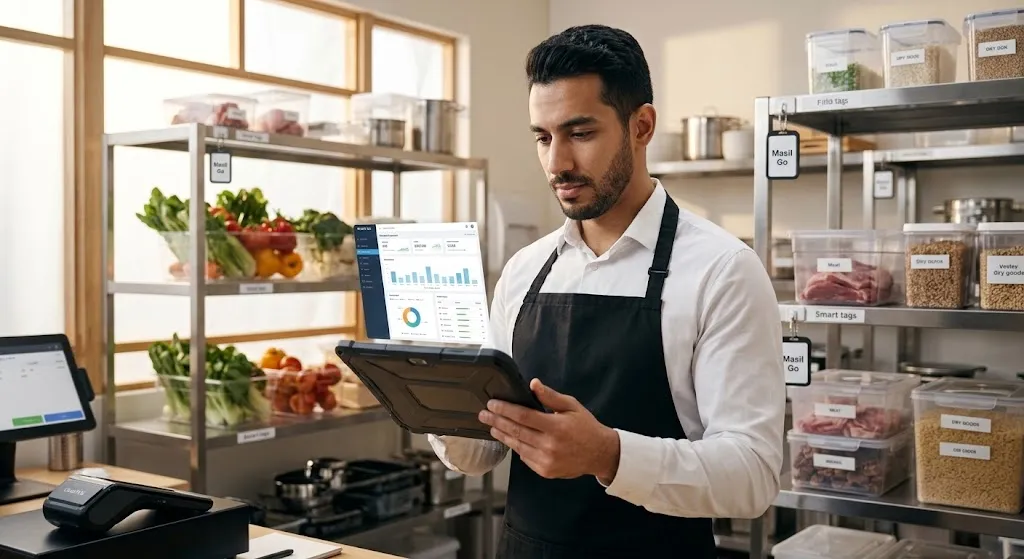
This is where specialized platforms like Masil Go transform operational back-of-house management by:
- Automatically deducting raw ingredients from inventory the moment an order is punched in at the Cloud POS terminal.
- Recalculating recipe costs instantly as supplier invoice prices change.
- Sending automated alerts before stock hits critical levels or approaches expiration dates.
- Syncing kitchen workflow with Kitchen Display Systems (KDS) to minimize preparation mistakes.
Common Pitfalls to Avoid in Inventory Management
Skipping Staff Training: Failing to train kitchen staff on exact portion sizes and correct storage protocols.
Ignoring Delivery Checks: Accepting damaged goods or near-expiry produce directly off the supplier's truck.
Overlooking Returned Dishes: Not tracking why meals are sent back to the kitchen (e.g., oversalting or cold food), which leads to wasted ingredients and re-cooks.
Conclusion
A restaurant’s success isn’t measured merely by the total cash coming into the till at night—it’s defined by the net profit you retain after expenses. Mastering restaurant inventory management and actively reducing food waste are the true foundations of a sustainable, resilient food business.
Take a close look at your storage procedures today, and consider adopting a cloud-based management platform that links your live sales with your inventory, ensuring every single SAR you invest in ingredients yields a return.
- #restaurant inventory management